What machine learning is, and why it is a good first research field
An explanation for students who have heard the words everywhere and parents who want to know what their child would actually be doing: what a model is, what an experiment looks like, and why the field rewards curiosity more than prior knowledge.
- CompetiLab Editorial
- 3 min read
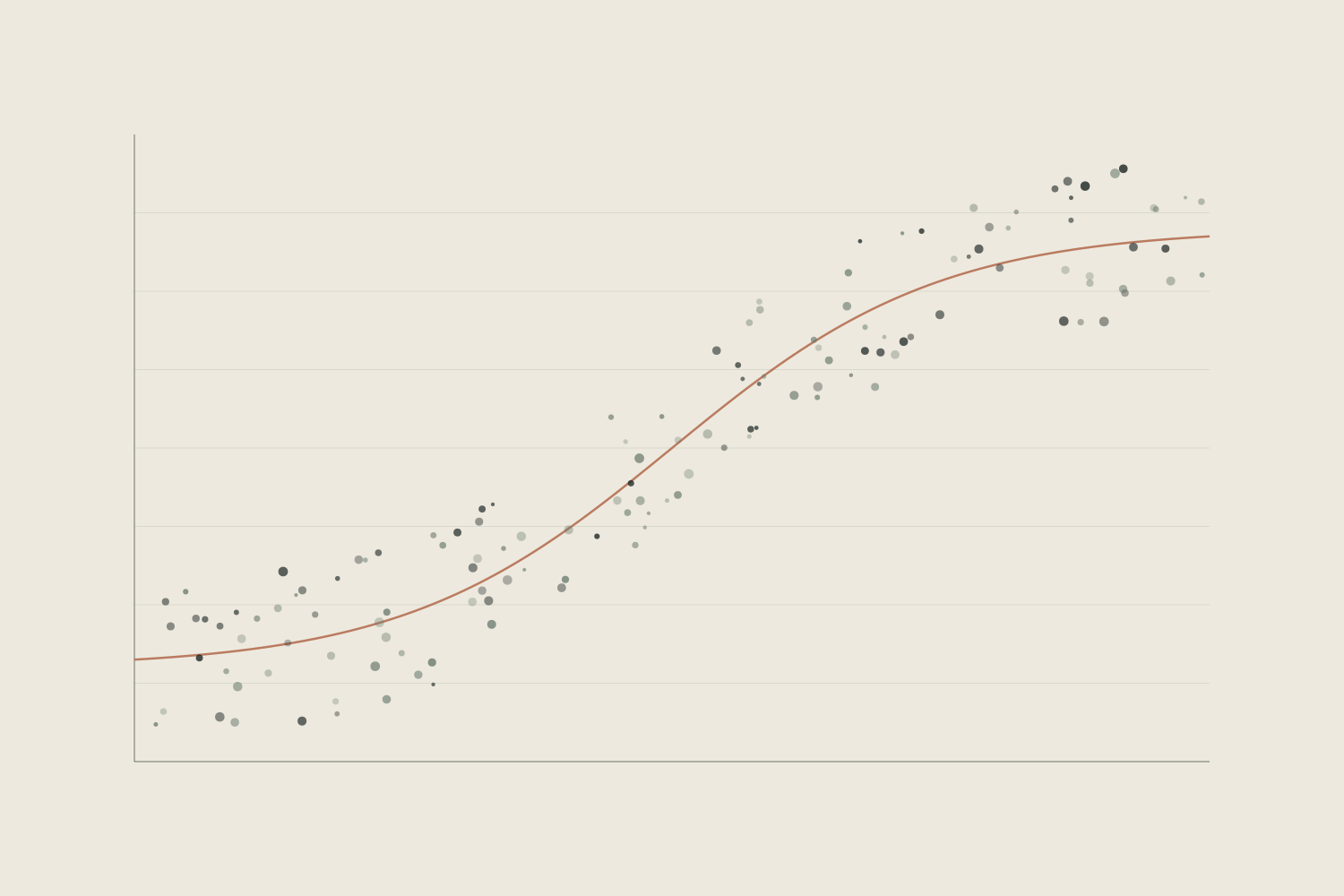
A machine learning model is a program that learns a rule from examples instead of being given the rule. A spam filter is not written as a list of forbidden words; it is shown a hundred thousand emails labeled spam or not, and it works out, from the words and patterns, which features make an email likely to be spam. The same idea predicts whether a patient will be readmitted, which students are at risk of falling behind, how bad tomorrow's air will be, or what a photograph contains.
That is the whole idea. Everything else is detail: which kind of model, how it is trained, how you check that it has learned something real rather than memorized the examples.
What an experiment looks like
A machine learning experiment has a shape that any scientist would recognize.
- A question. Can wearable data predict how well someone slept? Which features matter most?
- Data. A public dataset, with a license that permits research use. Thousands of such datasets exist, in health, education, climate, language and images.
- A split. The data is divided into a part the model learns from and a part it is tested on. The model never sees the test part during training. This is the single most important rule in the field.
- A baseline. The simplest reasonable method, so that any improvement can be measured against something.
- A comparison. Several models, or several versions of one model, scored on the same test data with the same metric.
- An interpretation. What the numbers show, where the model fails, and why.
Steps 1, 5 and 6 are science. Steps 2, 3 and 4 are craft, and most of the craft can be prepared in advance so that a beginner's first week is spent on the science.
Why beginners can do real work
Three things make machine learning unusual among research fields.
The feedback loop is minutes, not months. A biology student waits for a culture to grow. A chemistry student waits for a reaction. A machine learning student changes one line, re-runs the experiment and has a new result before lunch. Thinking gets exercised many times in one project: what did I expect, what did I get, why are they different, what should I try next.
The data is already there. No permit, no laboratory, no ethics board for a public dataset about air quality. (Datasets about people do raise ethical questions, and learning to take them seriously is part of the training.)
Honesty is built in. A model that scores suspiciously well has usually seen the test data by accident. Every beginner makes this mistake once. Learning to find it, and to distrust a result that looks too good, is the scientific habit in its purest form.
What a student needs
Curiosity, a laptop, and the willingness to write. Python can be learned to the level needed in two weeks with prepared notebooks. The mathematics behind the simplest models is secondary-school algebra; the deeper mathematics can come later, and many strong projects never need it.
What a student should not have to supply is infrastructure. Installing drivers, configuring environments, waiting for a laptop to train a model overnight: these are the places where beginners lose months and give up. A studio with GPUs, prepared modules and a mentor who has seen every error message before removes those walls. The student's hours go to the question.
What the work produces
A paper. Not a worksheet or a certificate, but a document with an abstract, a method, results and a discussion, written in the language of international research and arguable by anyone who reads it. For a first project it is a research report at the level of an extended essay. For a second, it may be a manuscript worth sending to a journal or workshop. Either way it is the record of a way of thinking, and that is the part that lasts.
Begin with a question.
Tell us what a student cannot stop thinking about. We will suggest where it could go.